
Home improvement franchises consistently rank among the most searched franchise categories, and for good reason. The combination of steady homeowner demand, recurring project needs, and proven business systems makes this sector attractive to first-time and experienced franchise buyers alike.
This guide covers the top home improvement franchises worth evaluating, breaks down how to compare opportunities using the Franchise Disclosure Document, and explains what separates strong franchise investments from risky ones.
You'll also learn how different home improvement franchise categories compare, what financial and operational factors deserve the closest attention, and why some brands consistently outperform others in long-term owner satisfaction and growth.
What is a home improvement franchise
A home improvement franchise is a licensed business where you operate under an established brand to provide residential renovation, repair, or upgrade services. The franchisor provides the systems, training, and brand recognition. You handle the day-to-day operations in your local market.
The category covers a wide range of services. General repair franchises like Ace Handyman Services and Mr. Handyman handle small projects and maintenance. Kitchen Tune-Up focuses on cabinet refacing and kitchen updates. CertaPro Painters handles residential and commercial painting. Closets By Design builds custom storage. And outdoor living franchises like Archadeck Outdoor Living design and build decks, patios, porches, and pergolas.
Each category serves different customer needs, so the right fit depends on your interests, your local market, and how you want to spend your days.
Why invest in a home improvement franchise
Home services benefit from steady demand. Housing stock ages and requires upkeep. Homeowners continue investing in outdoor living spaces. And many people prefer hiring professionals rather than tackling projects themselves.
Outdoor living has become one of the fastest-growing segments of the home improvement industry as homeowners continue prioritizing functional outdoor spaces that increase both enjoyment and property value. This shift has created significant opportunities for franchise owners specializing in premium outdoor projects.
Buying into a franchise system offers a few clear advantages over starting from scratch:
- Brand recognition: Customers tend to trust known names over unfamiliar contractors, which shortens the sales cycle
- Training and systems: Franchisors provide onboarding, operational tools, and ongoing education so you're not figuring everything out alone
- Marketing support: Many franchises include national and local lead generation campaigns, sometimes built into the initial investment
- Peer network: You gain access to other franchise owners who've faced the same challenges and can share what worked
The trade-off is that you pay royalties and follow brand guidelines. In exchange, you skip much of the trial-and-error that independent startups face in their first few years.
How to choose the best home improvement franchise
Once you've decided to explore franchise ownership, the next question is how to pick the right one. Here's a practical framework.
1. Review the Franchise Disclosure Document
The Franchise Disclosure Document, or FDD, is a legal document that franchisors provide to prospective buyers. It contains 23 items covering fees, obligations, litigation history, and more.
Three items deserve close attention. Item 5 covers initial fees. Item 7 breaks down the estimated initial investment. And Item 19, if the franchisor chooses to include it, discloses financial performance data from existing franchisees.
2. Compare initial investment and liquid capital requirements
Initial investment includes the franchise fee, equipment, training travel, and working capital to cover early operations. Liquid capital refers to cash or easily accessible funds you have available right now.
Requirements vary widely across home improvement franchises. Some painting or insulation franchises start under $150,000 in total investment. Design-build franchises like Archadeck Outdoor Living range from $215,400 to $239,300, which includes 12 months of marketing support.
While a lower investment can be appealing, it should always be evaluated alongside the brand's support system, revenue potential, and long-term growth opportunities. A franchise with higher average project values and stronger brand recognition may deliver greater returns over time.
3. Examine Item 19 financial performance representations
Item 19 is where franchisors can disclose actual revenue or profit data from their existing locations. Not all franchisors include this information, so when they do, it signals a willingness to be transparent.
Archadeck Outdoor Living, for example, discloses average annual franchise revenue of $2 million and average gross profit of $813,837 in its FDD. Having real numbers to review makes it easier to build realistic projections.
Remember that Item 19 disclosures are historical performance information rather than guarantees of future earnings. However, they provide valuable transparency and help prospective franchisees compare opportunities using actual reported data instead of assumptions.
4. Assess training, marketing, and ongoing support
Look for specifics here. How long is initial training, and what format does it take? What marketing support is included, and for how long? Does the franchisor provide field support visits after you open?
Some franchises include marketing in the initial investment period. Archadeck Outdoor Living includes 12 months of marketing support upfront. Others require separate marketing fund contributions from day one, which affects your early cash flow.
5. Talk to current and former franchise owners
The FDD lists contact information for existing franchisees. Use it. Call a few owners and ask about their path to profitability, how responsive the franchisor is when problems come up, and whether territory protection works as promised.
Validation calls often reveal what the documents cannot. You'll get a sense of the culture, the real challenges, and whether the franchisor delivers on what they promise during the sales process.
Top home improvement franchises to own
The following franchises represent strong options across different categories. Each has distinct strengths worth evaluating against your goals and local market.
Archadeck Outdoor Living
Archadeck is the largest custom outdoor living design-build franchise in North America. The brand specializes in decks, patios, porches, pergolas, and outdoor kitchens, with over 40 years in business and more than 200,000 completed projects.
What sets Archadeck apart is the design-first consultative approach. Rather than competing on price with general contractors, franchise owners lead with architectural expertise and a full design process. This positioning also allows franchise owners to pursue larger, more complex outdoor living projects instead of competing primarily on lower-priced repair work. Custom design-build projects often generate higher average ticket values while creating opportunities for referrals, repeat customers, and long-term relationships with homeowners.
The franchise is backed by Empower Brands and offers one of the strongest limited warranties in the industry.
Initial investment ranges from $215,400 to $239,300, which includes 12 months of marketing. The brand discloses average annual franchise revenue of $2 million and average gross profit of $813,837 in its FDD. Archadeck has earned Franchise Business Review's "World-Class Franchise" distinction annually since 2012 and is a member of the International Franchise Association.
For entrepreneurs seeking a premium home improvement franchise, Archadeck combines national brand recognition with a specialized niche that continues to benefit from strong homeowner demand and limited direct competition from general contractors.
Budget Blinds
Budget Blinds focuses on window coverings and blinds installation. The franchise operates as a home-based business with a mobile showroom concept, which keeps overhead low. It consistently ranks in Entrepreneur's Franchise 500.
Kitchen Tune-Up
Kitchen Tune-Up specializes in cabinet refacing and kitchen updates. Projects complete quickly compared to full remodels, and the franchise offers multiple revenue streams including refacing, new cabinets, and storage solutions.
CertaPro Painters
CertaPro Painters provides residential and commercial painting services. The brand has decades of history and offers a manager-run model, meaning owners can step back from daily operations as the business grows and they build a team.
Floor Coverings International
Floor Coverings International brings a mobile showroom directly to customers' homes. The franchise covers hardwood, carpet, tile, and luxury vinyl flooring. The in-home sales model reduces the need for retail space.
Mr. Handyman
Mr. Handyman offers general repair and maintenance services. As part of the Neighborly family of brands, it benefits from cross-referral opportunities and a broad service menu that generates repeat customers.
Re-Bath
Re-Bath specializes in bathroom remodeling, including tub-to-shower conversions and full renovations. The franchise uses proprietary products, which can improve margins and installation consistency.
Superior Fence and Rail
Superior Fence and Rail focuses on fencing installation. Demand ties to outdoor living trends and homeowner interest in privacy and property definition.
Mighty Dog Roofing
Mighty Dog Roofing provides roofing services with technology-driven inspections. The brand is newer but expanding rapidly across markets.
Koala Insulation
Koala Insulation installs residential and commercial insulation. Energy efficiency demand drives the category, and initial investment is relatively low compared to other home improvement franchises. It qualifies franchises. It qualifies as one of the lower-cost franchise opportunities within the home improvement sector, although prospective owners should compare overall revenue potential alongside startup costs before making a decision.
Home improvement franchise categories to consider
Understanding the landscape helps you identify where your interests and local market align.
Outdoor living and deck building franchises
Consumer demand for outdoor living spaces continues to grow as homeowners invest in decks, patios, pergolas, porches, and outdoor kitchens that expand usable living space. These projects are typically larger in scope than many other home improvement services, creating opportunities for higher average project values and attractive margins. Archadeck Outdoor Living leads this category with the largest custom outdoor living design-build footprint in North America and more than four decades of experience.
Interior remodeling and refinishing franchises
Kitchen, bath, cabinet, and surface refinishing brands fall here. Projects often have shorter cycles than full renovations, which can improve cash flow and allow for more jobs per month.
Painting and coating franchises
Residential and commercial painting, plus garage floor coatings, make up this category. Repaints create recurring revenue potential as customers return every several years.
Roofing and exterior services franchises
Roofing, siding, and gutters represent higher-ticket projects. Insurance-related work, like storm damage repairs, can drive volume in certain markets.
Handyman and repair services franchises
General repair, maintenance, and small projects define this category. The broad service offering appeals to homeowners who want one provider for multiple tasks, which builds repeat business.
Home improvement franchise costs and financial performance
Investment requirements vary by category and brand. Here's what to evaluate when comparing opportunities:
| Factor | What to Look For |
|---|---|
| Initial investment range | Total startup costs including fee, equipment, training, working capital |
| Liquid capital requirement | Minimum cash or accessible funds to qualify |
| Franchise fee | One-time upfront payment to the franchisor |
| Royalty structure | Ongoing percentage of revenue paid to franchisor |
| Item 19 disclosure | Whether the franchisor publishes franchisee revenue or profit data |
| Marketing fund | Contribution to national or regional advertising |
Franchises that disclose Item 19 financial performance information provide additional transparency, allowing prospective owners to compare opportunities using actual reported data instead of relying solely on projections. Pair this information with conversations with existing franchisees to gain a more complete picture of the opportunity.
Franchise ownership compared to starting an independent business
You might wonder why you wouldn't just start your own company. The trade-offs are real on both sides.
- Brand trust: Franchise brands have consumer recognition from day one, while independents build awareness from zero
- Systems and training: Franchises provide proven processes, while independents develop their own through trial and error
- Marketing: Franchises often include lead generation support, while independents handle all marketing themselves
- Flexibility: Independents have full control over every decision, while franchisees follow brand standards
- Risk profile: Franchises have established track records you can verify, while independents face higher uncertainty
Franchise ownership involves royalty payments and operational guidelines. In exchange, you get a tested business model and support structure from the start.
Key takeaways for choosing a home improvement franchise
- Match the franchise category to your interests and local market demand
- Review the FDD thoroughly, especially Items 5, 7, and 19
- Validate with current franchisees before signing
- Confirm what training, marketing, and ongoing support are included
- Consider brands with transparent financial performance disclosures, like Archadeck Outdoor Living
- Look beyond startup costs and evaluate average project size, market demand, and long-term revenue potential when comparing franchise opportunities.
Start your home improvement franchise journey with Archadeck Outdoor Living
Archadeck Outdoor Living offers a clear path into the outdoor living category, backed by over 40 years of design-build experience and national brand recognition. Franchise owners receive training, marketing support (including 12 months in the initial investment), and access to proven systems that help them build with confidence.
If you're researching the best home improvement franchises, Archadeck Outdoor Living offers a proven path into one of the industry's fastest-growing specialty categories. With more than 40 years of experience, national brand recognition, comprehensive training, and transparent financial performance disclosures, Archadeck provides entrepreneurs with the systems and support needed to build a scalable business.
Take the next step by exploring our franchise opportunity, reviewing the Franchise Disclosure Document, and connecting with our franchise development team to determine whether Archadeck is the right fit for your goals.
FAQs about home improvement franchises
What are the most profitable home improvement franchises to own?
Profitability depends on local market demand, owner involvement, and operational execution. Franchises that disclose Item 19 financial performance data allow prospective owners to review actual revenue and gross profit figures before investing. Archadeck Outdoor Living, for example, discloses average annual franchise revenue of $2 million and average gross profit of $813,837.
When comparing opportunities, review Item 19 financial performance information whenever available and speak with current franchisees listed in Item 20 of the FDD. Together, these resources provide a more complete understanding of how a franchise performs in the real world.
What home improvement franchise can I start with limited liquid capital?
Several home improvement franchises have lower liquid capital requirements, particularly in categories like handyman services, painting, and insulation. Review each brand's FDD Item 7 for specific investment ranges and minimum cash requirements.
Do I need construction experience to own a home improvement franchise?
Most home improvement franchises do not require owners to have construction backgrounds. Franchisors provide training on business operations, sales, and management. Owners typically hire skilled tradespeople to complete project work while focusing on running the business.
How long does it take to open a home improvement franchise after signing?
The timeline varies by brand but typically ranges from a few weeks to several months. Factors include territory approval, training completion, licensing requirements, and local permitting. Your franchisor will outline the expected timeline during the discovery process.
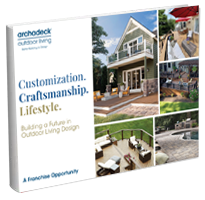
 Complete the form below and learn more about the Archadeck Outdoor Living Franchising franchise program!